For Customers & Partners

Run your medical-records workflow without ever leaving your case management system.

A non-technical overview of what LlamaLab can do for you behind the scenes — how cases flow in, how status updates flow back, and how completed records arrive directly in your repository.

Create cases via API Real-time webhooks Auto-upload to your storage Provider search Performance analytics

Welcome

Your case management system,
quietly upgraded.

LlamaLab handles every step of medical-record retrieval — from finding providers, to chasing records, to delivering them ready to review. Most of that can happen entirely behind the scenes, so your team continues working in the system they already know.

This guide walks through what's possible without anyone on your team logging into the LlamaLab platform — and what we'll need from you to set it up.

01 · How it fits together

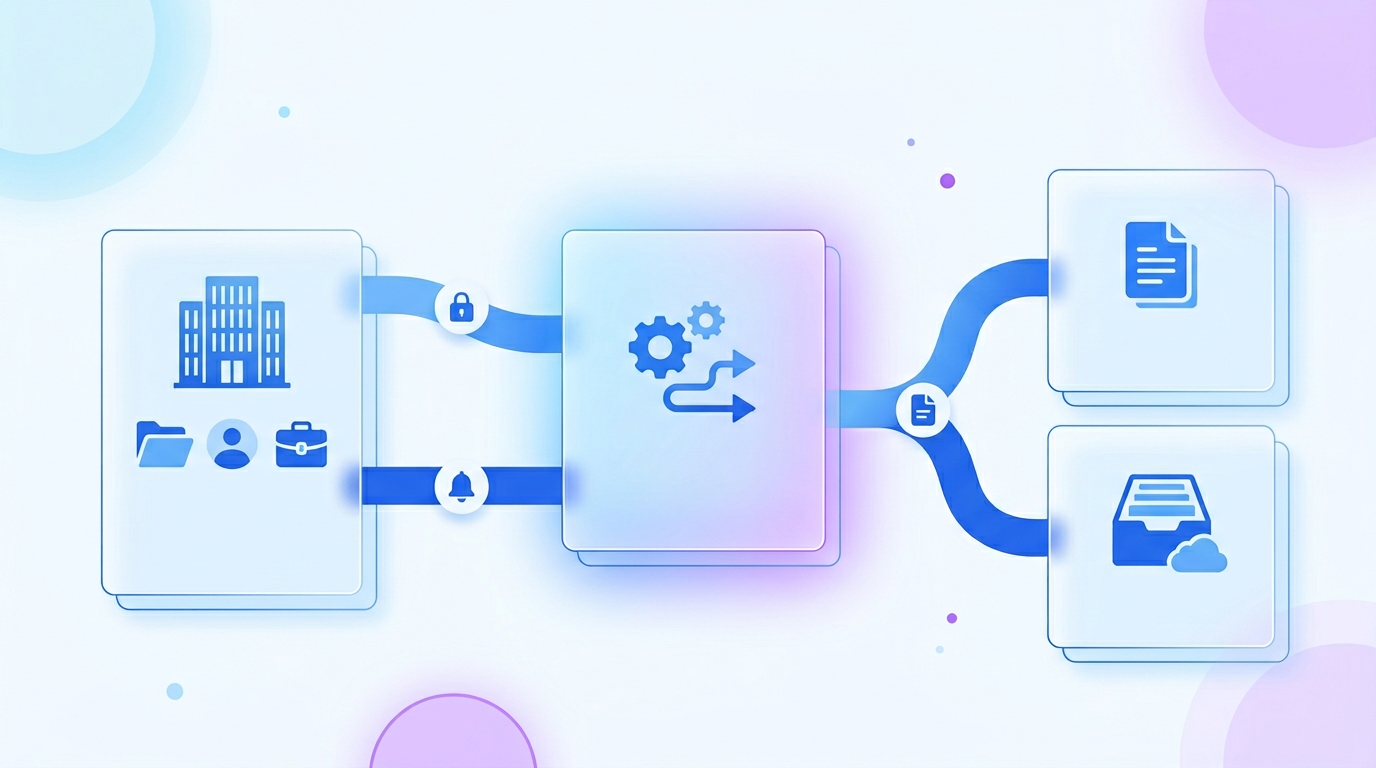
Your system talks to LlamaLab.
LlamaLab does the work. Records come back.

Three flows: cases go in, status & payment events come back, records ship to your repository.

You send cases

The moment a new client is intake'd in your case management system, send their details to LlamaLab. We open the retrieval automatically.

We send updates back

As each case progresses — records requested, documents ready, payment captured — LlamaLab pings your system so dashboards stay current.

Records arrive automatically

Finished records can be delivered straight into the storage location you already use — whether that's DocuWare, AWS S3, Google Cloud Storage, Azure, or your own system — so attorneys find them where they expect.

The bottom line Your team keeps working in the tools they already know. LlamaLab is the engine running underneath.
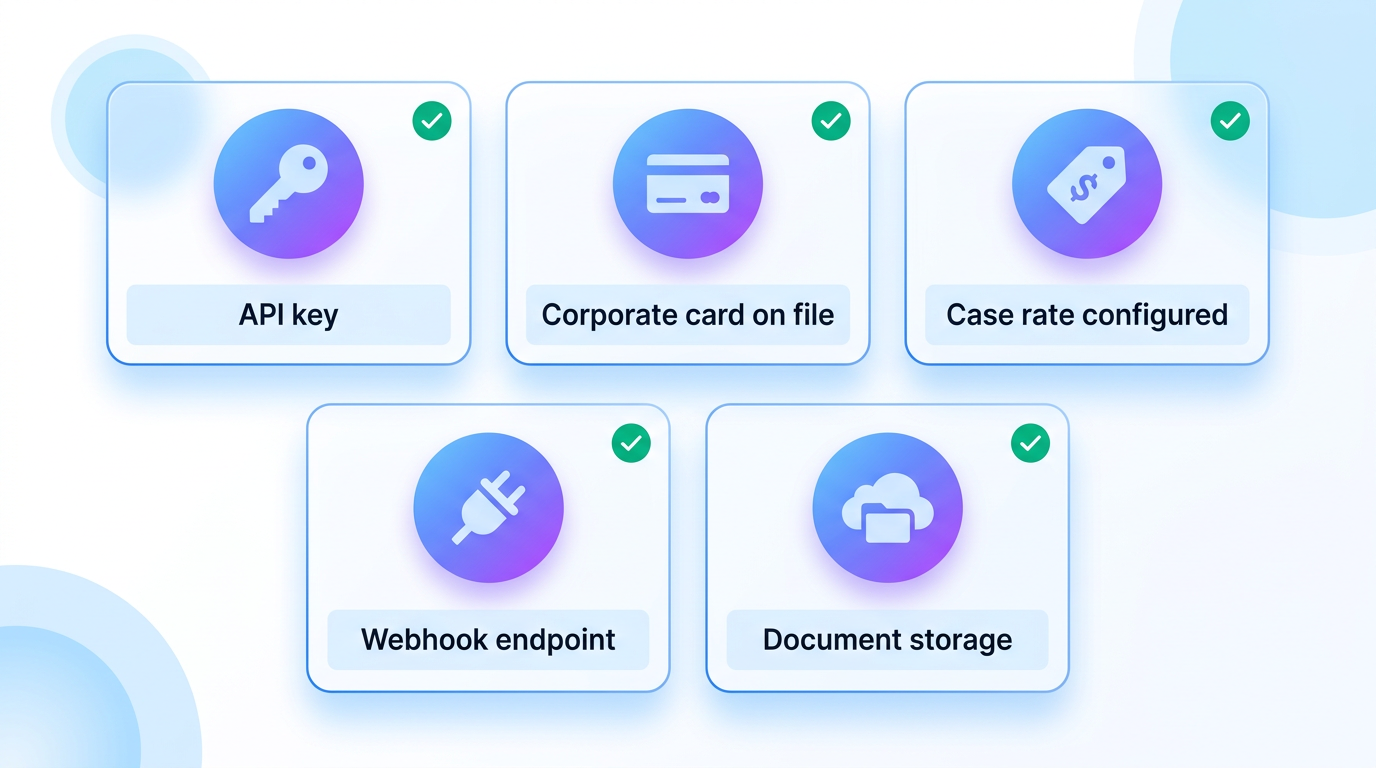
02 · What you'll need to start

Five things to put in place —
most take less than a day.

Setup time Typical onboarding: 1–2 working days for the basics; storage auto-upload adds another day for credential exchange and a test record.
03 · Send cases in automatically

From client signed
to records being chased — in seconds.

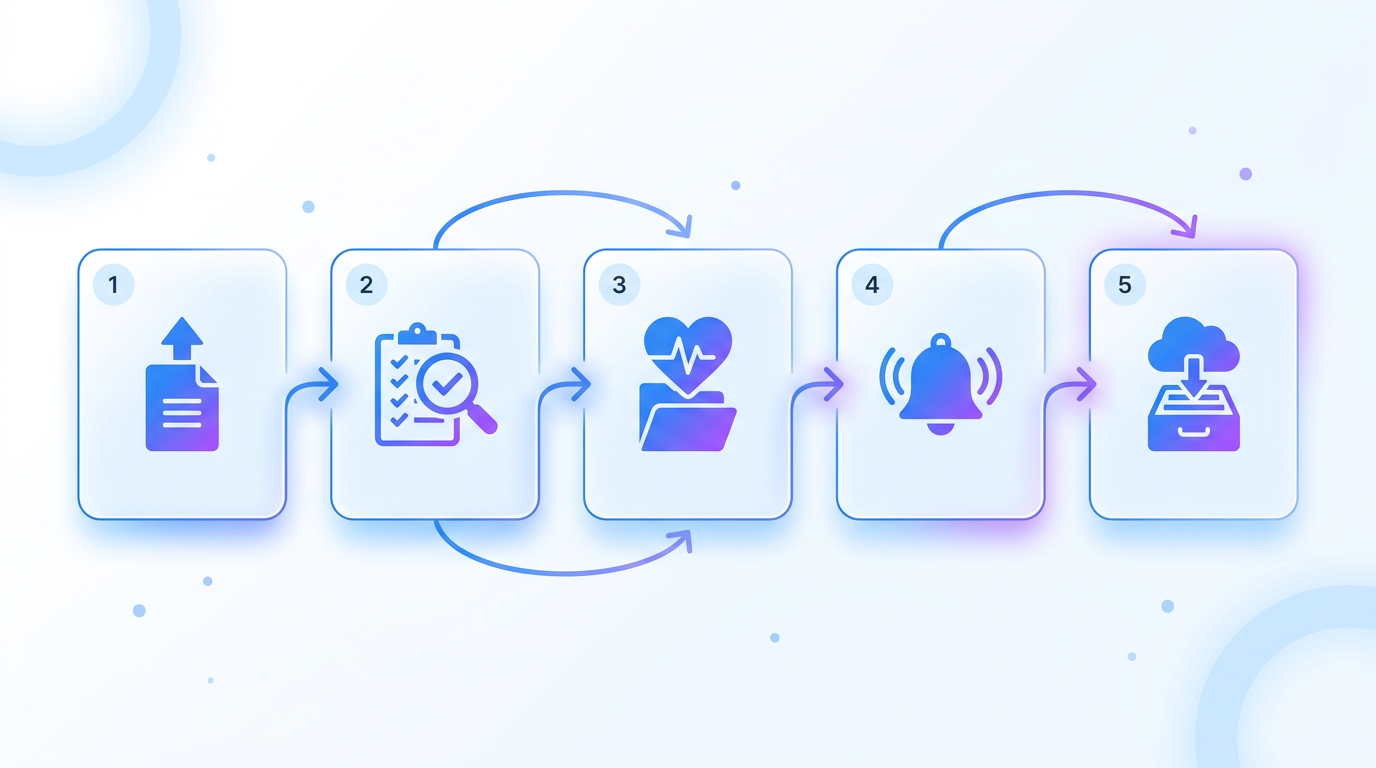
A new case moves from your system into LlamaLab and through to delivery without manual handoffs.

What happens

When a new case is opened in your case management system, your software sends LlamaLab the patient and incident details — name, date of birth, address, date of loss, the assigned attorney, and your own internal case ID. LlamaLab validates the information instantly, opens a project tied to your case ID, and begins the retrieval.

We carry out everything from finding the right providers to chasing slow responders. Your team never has to log into LlamaLab to start a case.

What you save

Hours of manual data entry per case. No double-keying patient details into another system.

How you find it later

We track your internal case ID alongside ours, so any follow-up lookup uses the ID you already know.

For your developers

Browse every endpoint, parameter, and webhook payload

The API reference lists each endpoint with full parameter tables, example requests in shell & common languages, and the exact payload your webhook endpoint should expect.

Open the API Reference →
04 · Stay informed in real time

Three streams of updates,
delivered the moment they happen.

LlamaLab pushes updates to a single URL on your side — no polling, no refresh buttons.
1

Case status updates

Every time a case moves forward — records requested, documents ready, review complete — we ping your system. Dashboards and case views update automatically without anyone clicking refresh.

2

Provider-level updates

Each case fans out to one request per provider or facility. As a single provider's status changes — authorization received, request mailed, records returned, action required — we send a focused update so your team can track sub-progress without waiting for the whole case to move.

3

Payment updates

When a retrieval fee or provider charge is captured against your card, we send the invoice number, amount, and payment method back so your finance team can reconcile from one source of truth.

How we authenticate to you Choose the security style that fits your IT policy — API key header, bearer token, or plain HTTPS to a private endpoint. Updates time out gracefully; failures never block a case from progressing.
05 · Records, delivered to you

Finished medical records
arrive where attorneys already look.

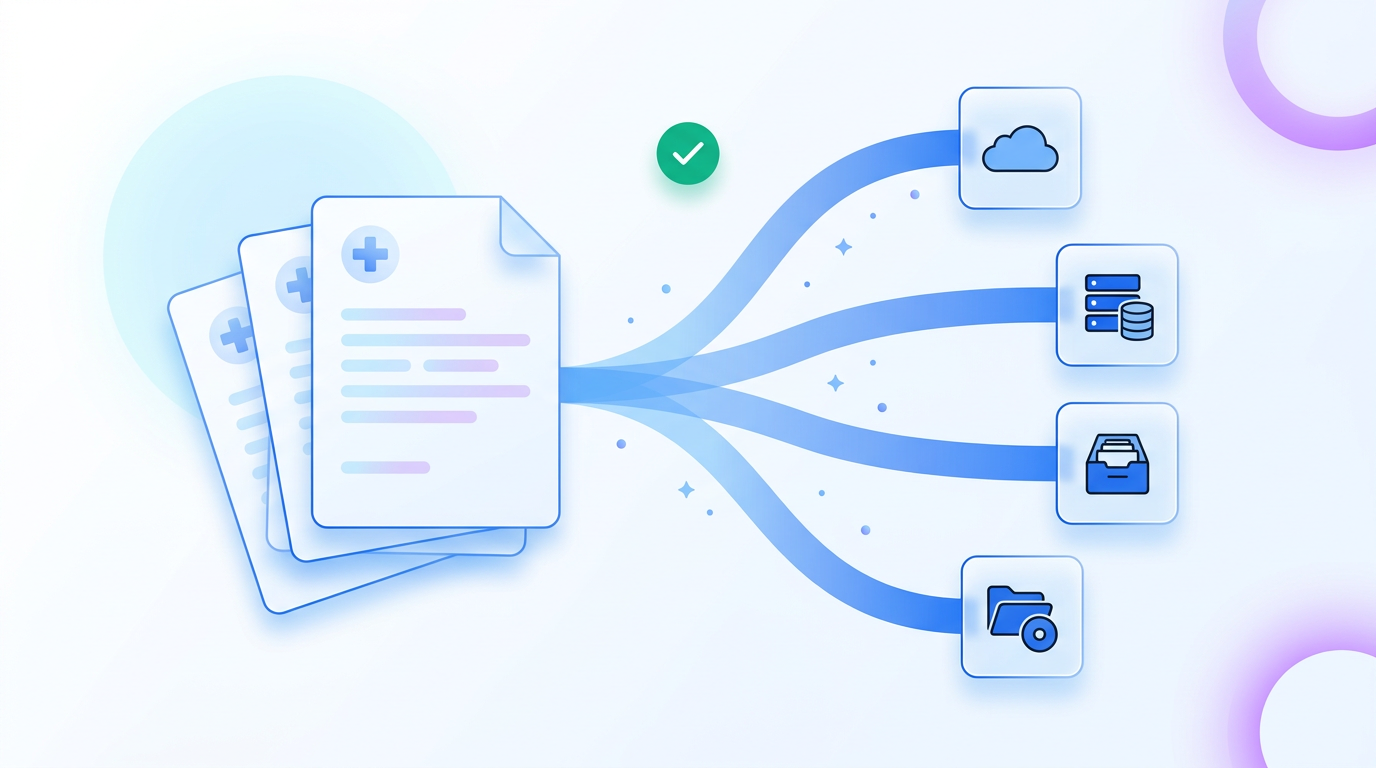
Records flow from LlamaLab into the storage location you already use — no email, no manual upload.

What happens

Once a retrieval is complete, LlamaLab packages the medical records and uploads them automatically into your existing document storage — whether that's DocuWare, AWS S3, Google Cloud Storage, Azure Blob Storage, or another system your firm already runs. Records land under the case file your team already uses, named and indexed, ready for review.

Setup is a one-time exchange of secure credentials with our team. After that, each case's documents land in the right folder without any hand-off in between — no copying files, no re-uploading, no chasing email attachments.

We don't lock you in You keep using whichever storage system suits your firm best. LlamaLab adapts to your stack, not the other way around.

Your team's workflow

Unchanged. Records appear under the matter, exactly where they look today.

What's eliminated

Email attachments, download/upload steps, lost files, and "where is the record?" follow-ups.

06 · Find providers & look up cases

Three small APIs that quietly
save your team a lot of clicks.

Search a hospital, refresh a case, or refresh a single provider request — from inside the screens your team already uses.
A

Provider search

From inside your case management screen, your team can type a hospital or clinic name and pick the right one in autocomplete. The selection travels with the case so we know exactly where to send the request.

B

Case look-up by your own ID

Your software can ask LlamaLab "what's the latest on case X?" using the same case ID you already track. No need to remember a second identifier — we map it to ours automatically.

C

Provider request look-up

Pull the current state of a single provider request — status, dates, provider details — using the LlamaLab provider ID we shared in the webhook. Useful for refreshing a stale row, recovering after a missed webhook, or syncing one facility on demand.

Why all three matter Together these calls let you build LlamaLab status, providers, and documents into the screens your team already uses every day — with a polling fallback for every webhook stream.
07 · See how it's working

Built-in performance reporting,
so you know the integration is healthy.

A simple report on how cases are flowing in: success rates, validation issues, and retries that recovered.

What you can see, on demand

For any date range, ask LlamaLab how many cases your system tried to send, how many succeeded on the first try, how many had a validation issue, and how many of those eventually went through after a retry. Useful for QA, for spotting data-entry patterns at intake, and for proving to leadership that the integration is paying off.

llamalab

Ready when you are.

Tell us which capabilities are most useful to you and we'll send a short onboarding plan tailored to your case management system, your storage setup, and your team's go-live timeline.

Typical pilot
2 weeks
Engineering on your side
A few hours total
Goes live with
A single test case